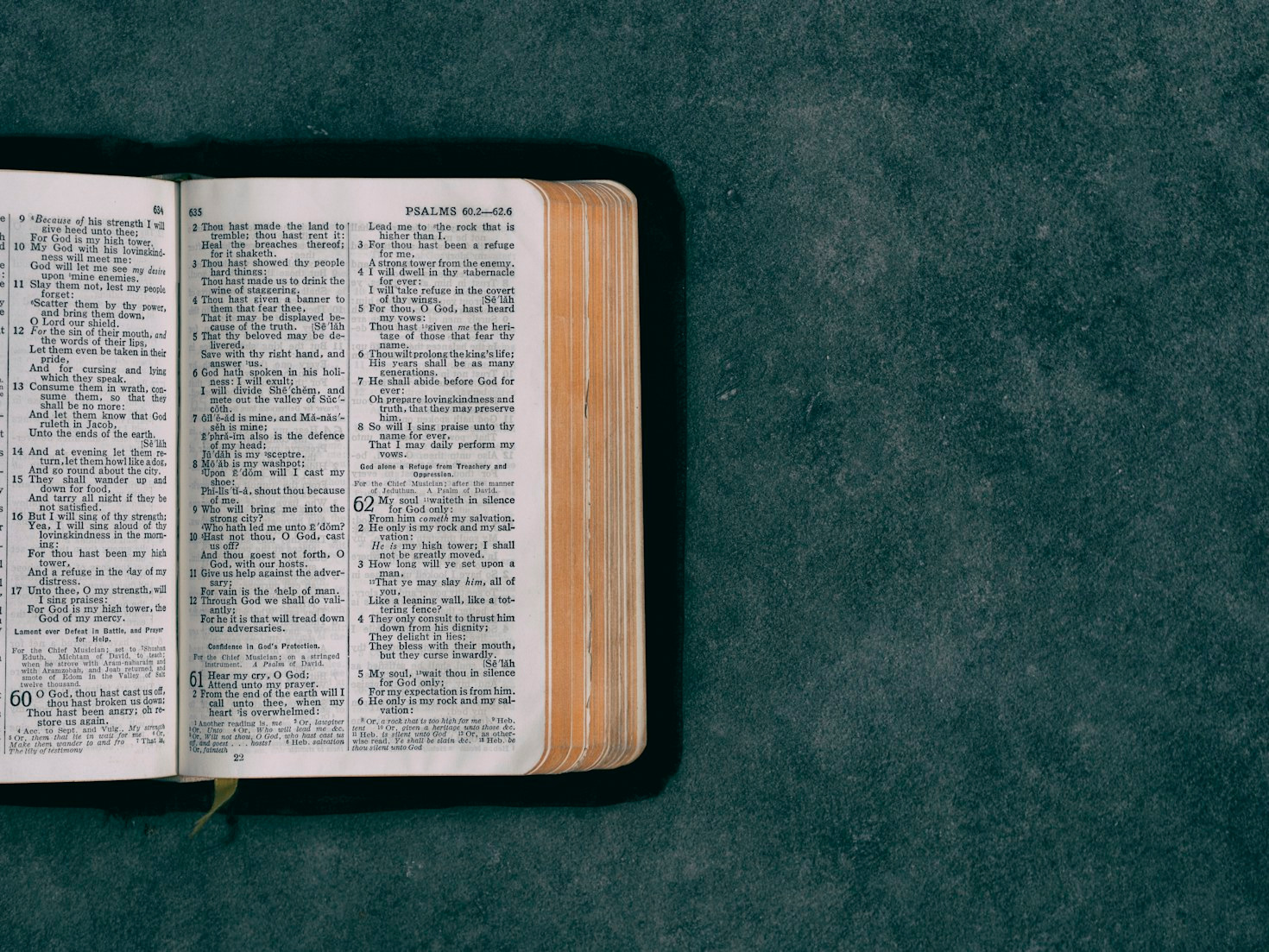
The idea that God does not change His mind has been both defended and attacked by many scholars over the centuries. There are passages of Scripture which would seem to affirm that God does not change His mind. But there are events where it seems that God does change His mind. How do we resolve these? Since we believe that Scripture does not conflict with itself, we need to find a solution which satisfies both.
Before we start this exploration, let us consider a few passages of Scripture.
SCRIPTURE Numbers 23:19 “God is not a man, that he should lie; neither the son of man, that he should repent: hath he said, and shall he not do it? or hath he spoken, and shall he not make it good?” COMMENTARY Here we see that God is claimed to not lie, nor repent, nor not do what He says He will do. The problem with this Scripture of course is that while we never find God lying, we are told explicitly that He has repented (ex. Genesis 6:6 see below). and that He has not always done what He said he would do (ex. Jeremiah 18:1-10). However, in this case, the claim of God not changing is related to the covenant with Israel when Balak wanted Balaam to curse Israel.
SCRIPTURE 1 Samuel 2:30 “Wherefore the Lord God of Israel saith, I said indeed that thy house, and the house of thy father, should walk before me forever: but now the Lord saith, Be it far from me; for them that honour me I will honour, and they that despise me shall be lightly esteemed.” COMMENTARY God here told Eli that his family would minister before Him [God] forever but that did not happen after Eli did not restrain and discipline his sons, Hophni and Phinehas.
SCRIPTURE 1 Samuel 15:29 “And also the Strength of Israel will not lie nor repent: for he is not a man, that he should repent.” COMMENTARY Here again we are reminded that the Lord does not lie or repent. In this case, the context is where Samuel has confronted Saul and has told Saul of the Lord’s decision which will not be changed.
SCRIPTURE 1 Samuel 23:1-14 “Then they told David, saying, Behold, the Philistines fight against Keilah, and they rob the threshing floors. Therefore David enquired of the Lord, saying, Shall I go and smite these Philistines? And the Lord said unto David, Go, and smite the Philistines, and save Keilah. And David’s men said unto him, Behold, we be afraid here in Judah: how much more then if we come to Keilah against the armies of the Philistines? Then David enquired of the Lord yet again. And the Lord answered him and said, Arise, go down to Keilah; for I will deliver the Philistines into thine hand. So David and his men went to Keilah, and fought with the Philistines, and brought away their cattle, and smote them with a great slaughter. So David saved the inhabitants of Keilah. And it came to pass, when Abiathar the son of Ahimelech fled to David to Keilah, that he came down with an ephod in his hand. And it was told Saul that David was come to Keilah. And Saul said, God hath delivered him into mine hand; for he is shut in, by entering into a town that hath gates and bars. And Saul called all the people together to war, to go down to Keilah, to besiege David and his men. And David knew that Saul secretly practised mischief against him; and he said to Abiathar the priest, Bring hither the ephod. Then said David, O Lord God of Israel, thy servant hath certainly heard that Saul seeketh to come to Keilah, to destroy the city for my sake. Will the men of Keilah deliver me up into his hand? Will Saul come down, as thy servant hath heard? O Lord God of Israel, I beseech thee, tell thy servant. And the Lord said, He will come down. Then said David, Will the men of Keilah deliver me and my men into the hand of Saul? And the Lord said, they will deliver thee up. Then David and his men, which were about six hundred, arose and departed out of Keilah, and went whithersoever they could go. And it was told Saul that David was escaped from Keilah; and he forbare to go forth. And David abode in the wilderness in strong holds, and remained in a mountain in the wilderness of Ziph. And Saul sought him every day, but God delivered him not into his hand.” COMMENTARY Here God has told David that Saul will come down to Keilah and that the men of Keliah will give David into Saul’s hands. Yet when David departed Keliah, Saul gave up the chase. Not only did Saul not complete the trip to Keliah, but the men of Kalieh did not give David into Saul’s hands. Here God foreknows something that will never happen. In effect, God told David what would happen if David remained in Keliah even though God did not directly specify that. God could have told David this will happen if you remain in Keliah.
SCRIPTURE Genesis 6:6 “And it repented the Lord that he had made man on the earth, and it grieved him at his heart. COMMENTARY Here we are taught that the Lord in fact has repented of an action He took; in this case creating man. God was also repentant (that is sorry) for making Saul king over Israel (1 Samuel 15:11).
SCRIPTURE Malachi 3:6 “For I am the Lord, I change not; therefore ye sons of Jacob are not consumed.” COMMENTARY This verse often cited, refers to the character and nature of God. However, the context here is again related to the covenant with Israel.
SCRIPTURE Jeremiah 18:1-10 “The word which came to Jeremiah from the Lord, saying, Arise, and go down to the potter’s house, and there I will cause thee to hear my words. Then I went down to the potter’s house, and, behold, he wrought a work on the wheels. And the vessel that he made of clay was marred in the hand of the potter: so he made it again another vessel, as seemed good to the potter to make it. Then the word of the Lord came to me, saying, O house of Israel, cannot I do with you as this potter? saith the Lord. Behold, as the clay is in the potter’s hand, so are ye in mine hand, O house of Israel. At what instant I shall speak concerning a nation, and concerning a kingdom, to pluck up, and to pull down, and to destroy it; If that nation, against whom I have pronounced, turn from their evil, I will repent of the evil that I thought to do unto them. And at what instant I shall speak concerning a nation, and concerning a kingdom, to build and to plant it; If it do evil in my sight, that it obey not my voice, then I will repent of the good, wherewith I said I would benefit them.” COMMENTARY There are at least two things to note in this passage. First, that the metaphor God seems to use here is God being the potter and that what God was making was marred in His hands. How would this be possible if a sovereign God was making something He intended to make and His will could not be resisted? But second, we see later in this passage that God announces something that will happen with a nation but that God may repent [change His mind] and not do what He stated. This is problematic because it would seem to mean either a) that God does not know what is going to happen, or b) God knows exactly what is going to happen but tells us something appearing false (ex. that a nation will be announced by God that He will build and plant it yet God will refuse to do the good if they are committed to evil). This is one of many places in Scripture that demonstrate the will of God is not always done and that the sovereignty of God does not result in Him controlling everyone.
SCRIPTURE 2 Kings 20:1-7 “In those days was Hezekiah sick unto death. And the prophet Isaiah the son of Amoz came to him, and said unto him, Thus saith the LORD, Set thine house in order; for thou shalt die, and not live. Then he turned his face to the wall, and prayed unto the LORD, saying, I beseech thee, O LORD, remember now how I have walked before thee in truth and with a perfect heart, and have done that which is good in thy sight. And Hezekiah wept sore. And it came to pass, afore Isaiah was gone out into the middle court, that the word of the LORD came to him, saying, Turn again, and tell Hezekiah the captain of my people, Thus saith the LORD, the God of David thy father, I have heard thy prayer, I have seen thy tears: behold, I will heal thee: on the third day thou shalt go up unto the house of the LORD. And I will add unto thy days fifteen years; and I will deliver thee and this city out of the hand of the king of Assyria; and I will defend this city for mine own sake, and for my servant David’s sake. And Isaiah said, Take a lump of figs. And they took and laid it on the boil, and he recovered.” COMMENTARY Here God specifically tells Isaiah to tell Hezekiah he was going to die. There were no conditions; it was an explicit statement. Yet we see Hezekiah humble himself before the Lord, acknowledging to God that He has tried to walk in truth with an upright heart. God answers this prayer and explicitly tells Hezekiah he will add 15 years to his life. This again is a case where God apparently changes His mind after the humbling of Hezekiah before Him.
So let’s consider some different perspectives on the idea God changes His mind.
First, the idea of whether God changes His mind is tightly integrated with what God says. What we mean is that if God says something will happen (especially when He says He will do it since God has few limitations) and then it does not (as shown in Scripture), there would seem to be a limited number of options to explain this if God has true foreknowledge (which we understand Him to have). This is why people suggest that God changes His mind. That is God says something will happen and then it does not. Some of these options are:
- God actually did not know what would happen beyond the ability of man to choose. This would seem to be a problem with God’s omniscience, which encompasses foreknowledge, as shown in Scripture. However, there is at least the possibility that God’s omniscience is an active capability as opposed to a passive capability. That means God must apply Himself to know the future. We are still possibly left with the discrepancy between what God says and what actually occurred. There are multiple Scriptures which suggest this idea. An example is “And the Lord said, Because the cry of Sodom and Gomorrah is great, and because their sin is very grievous; I will go down now, and see whether they have done altogether according to the cry of it, which is come unto me; and if not, I will know” (Genesis 18:20-21).
- God knew what all possible outcomes would be of His statement and the responses of men. This is generally called Molinism and is named after Luis de Molina and posits that God not only knows what will actually happen but all possible outcomes that could happen. In this case, God is prepared for any eventuality. There is no change of mind in God because in every case God is prepared with His response to man’s response. Yet we are still left with the discrepancy between what God specifically says and what actually occurred (which may be different).
- God knows that what He says will not come to pass, but what He actually states was His intention which of course can be defied through the will endowed to humans by our creator. Here since God is telling us His true intention, it can be stated that God’s mind did not change because He actively desired to do what He claimed.
Let’s now look at some of the arguments for and against.
Argument 1 Anything that changes in does so in a chronological order. But God is outside of time. Therefore, God cannot be in a series of before and after’s because this implies that change involves before and after but these concepts seem to be foreign to God’s innate nature. However, God created time, knows time, and interacts with His creatures bound by time.
While the statement about God here is true, God does operate in a temporal framework; that is the one inhabited by man. God himself is not subject to before and after but the operation of God is shown as temporal when He operates in this framework. Thus, there is before and after in the places in which God makes His proclamations.
Argument 2 Anything that changes, changes for better or for worse. Either something that is needed is gained that was previously absent (a change for the better) or something that is needed is lost (change for the worse). But God is perfect. He does not need anything (therefore cannot change for the better) and if God were to lose something He would no longer be perfect. Therefore, God cannot change.
This is a defense of why God does not change (that is His nature), not a defense of why God does not change His mind. There is no doubt from Scripture that the nature and character of God do not change. In fact, this should be one of the most reassuring aspects of God to those truly following Him and a source of terror to those committed to opposing Him.
Argument 3 All the places that God appears to change His mind are simply the result of anthropomorphic language in the Bible. For example, when God is said to have relented in His exchange with Moses over the Hebrew people continuing to put God to the test (culminating in the refusal to trust God to deliver Jericho) some would say that God did not really relent but the language was written this way so that we might understand it.
There are cases where there is anthropomorphic language in the Bible but is this an example of this? It is true that there are aspects of God which we cannot understand and which might be put into language we can understand. However, we must be very careful here. God has given us minds that are able to absorb and understand a great deal and it seems a dodge to simply assign to anthropomorphic language, things that don’t seem to make sense or seem to be in conflict with other passages. Is this a place where what was going on was so difficult to understand, it could not have been directly explained? Remember the Bible contains advanced concepts such as pre-destination, justification, etc. But was this actually necessary in the case cited? Could God not have inspired Moses to write simply that God knew Moses would appeal to God and God would respond with mercy? But if we assume that one passage of Scripture describing God is anthropomorphized for our benefit, wouldn’t many be? This leads us down a very slippery slope of trying to understand what is objectively true and what is presented in a certain way according to the limitations of humans. While I believe God does deal with us according to our limitations, I don’t believe it occurs in the examples where He tells us things we can plainly understand.
When we are committed to Scripture, we must use our reading of Scripture to understand our view of God rather than the reverse; that is what we believe of God to guide what we read in Scripture. That is God has inspired His word to reflect what He wants to teach us about Himself. We need to accurately understand the doctrine of divine immutability. God at least appears to change His plans in His interactions with man. We can show this in Scripture.
In the halls of seminaries, the idea of God’s immutability means that God does not change in any way. This affects Himself but also what He says. This means that he does not change either qualitatively or quantitatively. From this, and selective Scriptures, many believe that God does not change his mind, plans, or actions.
But there is no doubt we see in Scripture that God will say something and it will not come to pass. Again, some see this as the idea of anthropomorphic language. Anthropomorphic language is simply the idea that what God inspired to write was written in a way we can understand it even though it does not reflect the reality of a situation. For example, we might tell a child that a pet who has died is living happy on an upstate farm. Of course, that is not the situation, but we do it because there are many aspects to death that a child will have trouble understanding. The problem with this idea is that what God does may be more accurately seen as a pre-planned illusion for things we cannot understand. It also begs the question, how many things in Scripture fall under this idea of anthropomorphic language?
However, what do we do with the idea that God cannot change if all actions have been ordained from creation? Doesn’t this mean that God is not all powerful but under the complete control of what He has foreseen will occur? Does He have the freedom to change anything at all or do He and the universe act only according to a foreseen script? This would have profound implications in terms of what the Bible teaches. For example, think about the number of times in Scripture that God appears to change His mind. Whether it be the disposition of the Ninevites, the discussion with Moses about His treasured possession, the ministering of Eli’s family etc. All of these would be illusory.
God told Eli and His family that they would minister before Him forever which did not occur and if we believe that God knew this in advance why would He tell Eli something that He knew would never happen? Does this make God dishonest when He tells us what will happen and it does not? What about all God’s calls to Israel to repent? Did God know there was no chance that they would repent? If so, why issue the call? Just to reaffirm their accountability? We must be so careful here because this whole line of thinking seems to make God untrustworthy. We have created for ourselves, a logical impasse.
Again, the idea that God does or does not change His mind is inextricably linked to what God actually says. We all can understand the idea here: if God changes His mind, it implies God had decided his previously stated intentions were wrong (ex. Exodus 32). We must be careful of stating that God does not change His mind because it does not reflect Scripture.
SCRIPTURE Jeremiah 18:1-10 “The word which came to Jeremiah from the LORD, saying, Arise, and go down to the potter’s house, and there I will cause thee to hear my words. Then I went down to the potter’s house, and, behold, he wrought a work on the wheels. And the vessel that he made of clay was marred in the hand of the potter: so he made it again another vessel, as seemed good to the potter to make it. Then the word of the LORD came to me, saying, O house of Israel, cannot I do with you as this potter? saith the LORD. Behold, as the clay is in the potter’s hand, so are ye in mine hand, O house of Israel. At what instant I shall speak concerning a nation, and concerning a kingdom, to pluck up, and to pull down, and to destroy it; If that nation, against whom I have pronounced, turn from their evil, I will repent of the evil that I thought to do unto them. And at what instant I shall speak concerning a nation, and concerning a kingdom, to build and to plant it; If it do evil in my sight, that it obey not my voice, then I will repent of the good, wherewith I said I would benefit them.”
This concept is so important because the God of the Old Testament is the exact same God of the New Testament. This affects New Testament doctrine. This means we can affirm something which should be uncontroversial, God’s actions towards us can and will change if our actions towards him change. If God so desires, he can change his short-term plans in response to human actions. This in no way necessitates a change in God. He has the freedom to act in any way he pleases. However, God only acts in ways that are consistent with his nature. This means God’s nature and character are unchanging, that is immutable. However, God can change his actions as he sees fit to do.
So, what might be the definition of God’s immutability? How about the idea that “God does not change His being, purposes, and promises? However, as we have seen, while the promises of God do not change, those who actually receive the promises may. God does act and feel emotions, and he acts and feels differently in response to different situations and events. This is consistent with us being created in His image. God’s unchangeability, that is his nature is not impacted by God acting and feeling differently in response to the actions of human beings.
Argument 4 If anyone were to change God’s mind (say through argument), it must be because new information has come to light which was not previously known or the circumstances have changed that require a new action or response. If God changed His mind, it cannot be because He learned something for God is omniscient. Therefore, because the circumstances have changed, God’s relationship to the new circumstances are different resulting in change circumstances, not a changed God.
Again, we review Genesis 18:20-21, where God tells “And the LORD said, Because the cry of Sodom and Gomorrah is great, and because their sin is very grievous. I will go down now, and see whether they have done altogether according to the cry of it, which is come unto me; and if not, I will know.” God says to us, he will go down now to see if the outcry again Sodom and Gomorrah is accurate. Here God seems to say He does not know but will find out. This could support the idea that this is either anthropomorphic language or the fact that God did not actively know at the time the statement was made. That is His omniscience is an active capability. An active capability is one which must be exercised. For example, I can know what page 12 is in a given book says but I must actively look. If i knew what was on page 12 of a given book with out looking, then the ability is passive; that is no effort is required to exercise it.
The key in all this is perhaps understanding the statements about what God says in a contextual manner; that is we have to look at the context in which they are said. The statements are not meant to be understood in a universal manner. For example, God gives us some of this insight into this in Jeremiah 18 which we reviewed earlier.
In the three main passages (ex. Numbers 23:19, 1 Samuel 15:29, Malachi 3:6) which discuss God not changing His mind, what is being discussed? This leads us to a different way of considering the statements which suggests God does not change. Is it a contextual statement; that is a statement related to the specifics of what God says or is it a generalized statement that describes the nature of God in every situation? When God says he does not change so you, the descendants of Jacob are not consumed, is this a general statement or a statement about God not changing with respect to Jacob?
Some suggest this Scripture in Numbers 23:19 shows God does not change His mind but we see in Scripture that God has appeared to change His mind on several occasions (e.g., the Israelites, the Ninevites, Hezekiah’s Death, Eli, and others). With the interaction with Hezekiah, God specifically sent Isaiah to tell Hezekiah to put his affairs in order for Hezekiah was going to die (Isaiah 38:1). But after Hezekiah sought the Lord’s mercy through tearful prayers, Hezekiah was given another 15 years of life.
So here we must look for a deeper meaning. The word “repent” (Hebrew nacham) often means to be sorry or regretful, not to “turn around or change one’s mind” as “repent” (Greek metanoeō) means in the New Testament. There are also plenty of times that God has done exactly as He said He would, and has not changed His mind. But it is the essence of our God that does not change. He hates sin. He expects respect and worship. He loves us greatly, but that love does not extend to unlimited tolerance for sin or rebellion. He is equitable, moral, and holy. However, with God there is balance.
There are many that say that God does not change His mind because of His knowledge of the future. While this is probably correct, we are left with another conundrum if we don’t think through this carefully. For example, we cited the example of what God told Isaiah to tell Hezekiah. If God knew in advance that Hezekiah was not going to die because Hezekiah would pray to God and God would answer His prayer, it may seem that God was untruthful in telling Isaiah to tell Hezekiah he was going to die. But this is not God. Our God is truthful. So, we must find a way to understand God where our understanding of who He is and what He says are aligned.
One of the ways that this may be resolved is that God tells us truthfully what His intention is. This resolves many of the places in Scripture where God says something will happen and yet it does not. For example, God earnestly told the Assyrians that Ninevah would be overturned in 40 days. God’s intention was to destroy the Ninevites for their evil. Yet when they repented (as we believe God knew they would), he relented. Yet it was His truthful intention to destroy the Ninevites for their evil.
Whether God actually changes His mind or not remains subjective for some of the reasons explored (ex. claims about God not changing His mind may be contextual, not general). However, even if God does not actually change His mind, from our perspective and the perspective of Scripture He does.
When we look at the Old Testament, we often see that God is not a micromanager determining everything down to the last detail. That is God does not need to control every detail to accomplish His purposes. In the Old Testament, God’s plans are most often revealed as macro plans; that is overarching goals. Indeed, a being with foreknowledge can simply allow a free creature to act as he desires with God reserving the right to intervene when His purposes would not be carried out by free creatures. But even in doing so, God does not cause man to do evil. God can also allow Satan to also participate in achieving God’s purposes. For example, did Satan want Jesus crucified? Likely. Did God have to force Satan to influence people to kill the Messiah? No.
God can adjust his plan if he desires, without forfeiting his sovereignty. God is still in control of the world
even if he does not determine every little thing that happens; even if he changes the working of his plans
in response to human actions God still is in ultimate control.
This does not make God less sovereign. God does not and has not controlled mankind, with rare exceptions in the Old Testament. We are not puppets and God is not a puppeteer. God can achieve His purposes in spite of the creatures with the ability to choose. But we must also remember that there are purposes of God which man does not understand nor has been told about. There are other purposes which man has assigned to God, but which are not actually purposes of God.
So how do we resolve this issue? There are a couple of different ways.
First, the statements about God not changing are contextual statements, not general statements. That is they apply to specifics of the covenant between God and His people, not a general statement of His capability. in every case. That means that all those who are in covenant with God and remain in covenant with God will receive His promises and what He has said. Those who refuse to remain in covenant with God are not assured of receiving His promises.
Second, the idea is that when God tells us something it is based firmly on what He intends to do, even if it turns out He knows that will not actually happen. This is more problematic because it brings us to the point where we must acknowledge that God tells us things which may not actually happen. At the very best this seems to make God disingenuous which we do not believe He is.
Third and finally, we may at least ask whether the concept that God knows all is an active or a passive capability. That is does God actually know all or can God know all? Is it a capability that automatically calls to mind all things or must God actively look to see the future? For example we often imagine that time is unfurled before God as a scroll. While the scroll contains past, present, and future events, must God must actively look at the scroll to know about events, or does He have an inherent knowledge of what has been, what is occurring, and what will be?
The one that seems to fit best, is the idea that God deals with us according to our limitations, not His lack thereof. What this means is that when God says something, even though He knows the future, that does not mean what He communicates to us is certain. We see many examples in Scripture of this. But this is also very important because many synthesized doctrines are created based on God dealing with us according to His lack of limitations rather than according to our actual limitations.
Examples include the fact that God said all the Israelites would enter into the Promised Land (Exodus 3:16-17, Numbers 14:22-23), said Eli and his family would minister before Him forever (1 Samuel 2:12-36), that Hezekiah needed to put his affairs in order because he would not recover and would die (2 Kings 20:1-11), that Ninevah would be overturned in 40 days (Jonah 3:1-5), that God will state what will happen to a nation but it may change depending on what the nation does (Jeremiah 18:5-12), and others.
So, it seems that God does indeed Hebrew nacham (that is change His mind), at least from the perspective of the created creature, but he does so in ways which are consistent with his unchanging nature and character. God is graciously willing to seem to adjust his plans when the actions of mankind necessitate it, but he will only do so on his own terms and in his own way. God changes his actions towards man when man changes his actions towards God. We will look at a couple examples although there are many in Scripture.
Let’s just start with a simple one. Consider what God said to the Ninevites through Jonah. In Jonah 3:4, Jonah said “Yet forty days, and Nineveh shall be overthrown.” Was Ninevah overthrown in 40 days? No. Did God know that Ninevah would not be overthrown? Yes, at least as we understand what God knows. So, did this mean that God lied? No. What it means is that God earnestly planned to overthrow Ninevah but the repentance of the Ninevites caused Him not to do that. God knew they would repent. But because God deals with us according to our limitations, He simply stated what His actual intention yet the reality of how He ended up acting was based on the actions of men. The reason that this is important because we need understand that even though God knows all, His statements to us are based on what He intends to do within our framework to choose. Along with this was the unstated condition in what He told Ninevah, “unless you repent.”
Second, consider Jeremiah 18:7-10. In this passage God says He may explicitly state what He will do with a nation but ifthe nation does the opposite of what they have been doing, it will result in a change in the actions that God says He would perform on behalf of that nation. Here again, God tells us what His intention is based on the current facts (not those He knows will change) showing that God communicates with us in a way that is commensurate with our limitations with respect to time. The only difference in this situation and others (ex. Ninevah as shown above, Moses and all the Israelites not entering the Promised Land, Eli not ministering before God forever, etc.) is that God tells us in advance that the plans for a nation are subject to what that nation actually does. By the way, the exact same concept affects our salvation. Anyone who believes that a person may receive the promises of God on their own terms is mistaken.
So, what is the answer to this? The answer is that God communicates to us in a manner considerate of our limitations. For example, we are bound by time, but God as we understand Him, is not. What that means is that although that God knows and sees the future we do not. But remember that God has said things that have not come to pass as we showed above. Why is this? Because God tells us what His intention is however just because it is His intention does not mean it will be happen because God has granted us free will.
This may be one of the most important ideas in Scripture because if true, it sets the basis of other errant doctrine which does not consider this perspective. Here is a simple example. We know that God justifies (declares us righteous) based on our faith. Because men assume that God sees the future and acts according to His lack of limitations, they assume such proclamation is a permanent one regardless of what a man actually does after being declared righteous. But again, this is problematic when looking at other situations, especially when God proclaims something and then it appears to change. In this particular instance God even tells us that men are also justified by their acts which means that the initial justification is not the end of the story.
This does not make God untruthful nor does it mean God does not know what is going to happen. Rather God tells us His will and His plan, but we have the ability to not act according to that plan. God has granted us that freedom to choose. God still knows what is going to happen but because we do not, and God does not tell us in many individual circumstances, we cannot assume that because God has said something it will happen to a given individual. That is what happens is dependent on how we use the freedom to choose that God has given us.
The danger of not understanding how God operates in Scripture is that it often forms the basis of interpreting other parts of Scripture and shapes the doctrines that come from the pulpit. For example, when one believes that God will always do for a given person what He says regardless of the behavior of that person, we end up with errant doctrines.
This brings us to three key ideas which provide a better understanding of how God acts than does what is claimed from many pulpits.
Idea 1: God deals with us according to our limitations and the limitations of our frame of reference and not His limitless capabilities.
Idea 2: God, from our perspective, does appear to change His mind based on the actions of human beings regardless of whether there was an actual change of mind within God (which likely did not occur).
Idea 3: God always honestly tells us what He fully intends to do however for selective (and here we speak of those items which involve a creature) decrees, they may change based on the actions of men. When this occurs, it most often takes the form of someone else receiving what God has promised if the initial recipients were unfaithful.
So, God’s apparent changes of mind can be explained with these three ideas.