
In modern protestant circles, justification is often viewed as a once and permanent declaration, completed when one places their faith in Jesus Christ. However, this understanding is Scripturally strained. Here are the implications of this idea.
First, one may abandon their faith as shown in Scripture and remain justified.
Second, one may live in rebellion to God as shown in Scripture and remain justified.
However, Scripture does not directly state this idea and the foundational basis for it is also problematic. As stated, there is no Scriptural basis, when Scripture is viewed as a whole, that justification is a one-time event. Furthermore, the main reason that they assume justification is one-time and permanent is because of God’s foreknowledge. However, this is not the way God operates with His creation. Although there are many examples in Scripture, let us consider just one. in 1 Samuel 2:30 we read “Wherefore the LORD God of Israel saith, I said indeed that thy house, and the house of thy father, should walk before me for ever: but now the LORD saith, Be it far from me; for them that honour me I will honour, and they that despise me shall be lightly esteemed.” The point here is that God has the foreknowledge to know that Eli would not restrain his sons and the promises made to his father would not stand to him personally. However, and this is an important concept that much of Christianity misses: God deals with us according to our lack of limitations and not His lack thereof. There are many places in Scripture where this is demonstrated. Jeremiah 18 would constitute another example.
Now let us look at the difference between sanctification and justification.
Sanctification is generally about what we are. Sanctification is an internal transformation that is wrought by the Holy Spirit if we will submit to Him (Romans 12:2). However, the Holy Spirit leads us; He does not control us. Thus, not all people who come to Christ will be sanctified. Holiness is a state and transformation to the character of Christ is to a state, not an action. Thus, actions coming after our profession of faith, do not result in sanctification. Rather, righteous actions come from our internal transformation. The modern idea that progressive sanctification embodies both transformation of character and works does not align scripturally. Progressive sanctification is transformation of character only.
Justification is what we are declared based on what we actually do (ex. have faith, act). People can in fact be righteous by their actions. This is acknowledged many places in Scripture. This is especially true after we come to Jesus Christ in faith and the Holy Spirit leads us to act. For example we are taught in 1 John 3:7 “Little children, let no man deceive you: he that doeth righteousness is righteous, even as he is righteous.” We are explicitly warned here not to be deceived. Here God explicitly acknowledge that man does righteous things.
Christ was fully righteous (Greek dikaios) because of what He did (1 John 3:7), not just because of who He was (1 Peter 2:22). But the idea is reaffirmed throughout Scripture (ex. Matthew 12:37, Romans 2:13). Remember that this justification arises from acts during a person’s life. Looking specifically at Romans 2:13, this idea is reflected when it tells us “(For not the hearers of the law are just before God, but the doers of the law shall be justified [future tense]”. This clearly means there is justification based on actions. Even though the root Greek word for righteousness and justification is the same, the ideas are not entirely identical but closer than is often presented. One is always justified or declared righteous based on an actual act.
Yet sanctification and justification are intimately related and cannot be separated. Progressive sanctification generally leads to final justification, but is not guaranteed to. That is as we pursue the character of Christ, as imperfect as we are, it generally, but not always, leads us to act in an aligned manner. When we listen to the Holy Spirit and follow where God leads, we are doing as He wills. However, the process of progressive sanctification is synergistic in nature meaning that we must willingly cooperate with God’s grace.
Initial justification is based on faith and faith alone. Final justification is based on continued faith and the acts done in faith performed throughout our lives. Faith in Scripture is almost always in the present tense meaning it remains critical to our final salvation. Greek dikaiosýnē in the broad sense, is the state of him who is such as he ought to be; righteousness. Furthermore, there are at least two passages (and probably more) that tie justification to faith meaning that ongoing faith leads to ongoing justification. These two passages are Romans 3:28 and Galatians 2:16.
This is important and explains why salvation is discussed in multiple tenses. All places in the New Testament where the eternal destiny of a person is determined (save the thief on the cross who did all he could in his circumstance and also died under the Old Covenant) it is stated to be based on works, not what they are. In fact, you will find that when the eternal destiny of a person is determined in Scripture one thing we might expect to be mentioned, is not: faith.
The logic goes something like this. We have to account for salvation in three tenses. The first is our initial salvation and it is based on faith alone. We bring nothing to the cross. Here we have entered through the strait gate and put onto the narrow path. We are being saved as we continue to be faithful and sow to the Holy Spirit walking the narrow path. We will be finally saved from God’s wrath and receive eternal life based on our continued faith and the righteous acts we have done. The modern church makes a significant error with this. Because they do not understand the differences in types of works spoke of in Scripture, many in the modern church, see the work of being baptized is the same filthy rag as fasting for a day. That is they see all works we do as filthy rags. This is unscriptural.
There are multiple reasons that this is untrue. As we stated previously, the first thing we note is that the eternal destiny of men in Scripture is based on works. Second is that there are direct teachings that we do righteous works. One such verse is 1 John 3:7 “Little children, let no man deceive you: he that doeth righteousness is righteous, even as he is righteous.” We are explicitly warned here not to be deceived. Who is deceiving us? Those who claim that everything we do are filthy rags before God. When we are led by the Holy Spirit and do what He leads us to do, our works are righteous even if not perfect because they are what God wills. Baptism falls into this camp. Most of the places in Scripture where we are warned not to be deceived have to do with not aligning our actions to our faith. It tells is that if we do what is right, we are righteous, just as Jesus himself was righteous.
The reason that we say there is a final justification is because we see in Scripture (actually across Scripture) that works are what are cited as determinants of where a person spends eternity and that people are also cited as righteous based on what they do (of course from a true and living faith). It is here that it must be stressed that works alone cannot save. The reason is clear. For the same reason that we cannot be saved by the works of the law (that is we cannot fully and always keep it which is God’s standard), so we must have Christ. But the Bible teaches clearly that one is to use their faith to bring glory to God; to love Him and others.
As we discussed earlier, there are three types of works in Scripture.
- Works of the flesh which cannot save and are as dirty rags. (ex. Isaiah 64:6)
- Works of the law which cannot save us or fully justify us because we cannot fully and always keep the law (ex. Romans 4:6). It must be noted that if we could keep 100% of the law, 100% of the time, we could save ourselves just as Jesus was the perfect sacrifice by being without sin. This is the only way a person could potentially “earn” salvation (but of course Romans 3:20 shows that is not possible).
- Works of the spirit which are a part of salvation and partially (but never enough independent of Christ) result in us being righteous based on those works (ex. 1 John 3:7).
While we can conclude from this is that initial justification, which is based on faith alone (ex. Ephesians 2:8-9) there is also justification based on works. Whether this justification is progressive or another forensic declaration based upon the totality of our lives when we are judged, is not fully clear. However, given the fact that initial justification is forensic, we opt for the idea that based on our works, we are declared righteous a second time. We do not step into God’s court a single time but at least two times.
However, once we have come to Christ, we are to act in a manner consistent with that faith. Furthermore, those works done before God, in the Spirit, do contribute to our righteousness. Not perfectly righteous which is the standard God requires, but still righteous at times. This means that of course since we cannot maintain perfect righteousness before God, we must have Christ first and foremost. But any idea that we are not to pursue righteousness through works is also unscriptural. Remember the parallel of the Old Testament law. Were there those that kept parts of the law at times? Yes. Would that have made them righteous at that time they did those works? Probably, especially if the motive was to do what God desired. But the issue was that they could not always and fully keep the law which is God’s standard. Hence, we need Jesus Christ. No exceptions.
James 2 directly discusses the fact that people are justified by works, just NOT the works of the law. Some modern theologians have attempted to explain this away by saying this justification is for other men. Unfortunately, this explanation does not hold because at least one of the examples given was a place that only God and Abraham were. There were no others around to witness that work therefore this justification cannot be before men (not to mention the passage context does not support this idea). But this again goes back to the idea that we cannot be justified by works but we can do righteous things in the Spirit and according to Scripture these things serve as a measure of righteousness (again 1 John 3:7).
We must remember that Jesus was righteous because of what He did. He fulfilled the law, perfectly. That was why He was a perfect sacrifice. Again, justification is always based on an act or acts. Initial justification is based on us placing our faith in Jesus Christ. That is an act. But there also seems to be a final justification that exists based on continued faith in Jesus Christ and the works that flow from it.
How do we come to this conclusion? We look at three different ideas. First, is that we do righteous works before God in the Spirit and these righteous works cause us to be righteous (1 John 3:7). Second, we see the Old Testament saints justified in what righteous works they did (ex. James 2:21, 25). Furthermore, there are other references to people being justified by actions (ex. Romans 2:13, 12:37). Third, as we have stated before, we see that works are the discriminating factor in determining the eternal destiny of a person in Scripture (ex. John 5:28-29, Romans 2:6-8, John 15:1-6, Matthew 25:31-46, etc.) with the exception of the thief on the cross who again not only did all he could in his situation but also was under the Old Covenant. While it may be stated this is assumed, it nonetheless is important to realize that the works, done in faith, are what are part of the basis of eternal life. Of course, this does not mean that we can be saved by works but they are a critical part of our salvation.
However, once we have come to Christ there is a second justification. Whether that justification is a single, final one or on-going justification proceeding from works done in faith is not fully clear, but the usage of the word justification (Greek dikaiósis) most often is in the aorist tense and so aligns with what we are most often taught, that it is a momentary declaration. However, even here we need to be careful. We see things in Scripture in the aorist tense which show that the effect of the action can be abated and that the aorist tense is not universally as we expect it to be. This is one of the reasons why the early church fathers are probably better arbiters of the Greek than modern scholars.
Some may conclude that because something is stated in the aorist, indicative verb tense, that it is always in the past or it always is permanent. This can be shown to be in error in certain cases. We state this because justification is often viewed, in spite of language to the contrary, as a singular, punctiliar event. The aorist can also represent more than just a single or punctiliar action. This means is that it can also collectively represent a series of actions, viewed as a whole, without needing to differentiate the constituent components of the action.
Consider the following passages.
SCRIPTURE Matthew 3:17 “And lo a voice from heaven, saying. This is my beloved Son, in whom I am well pleased.” COMMENTARY Here well-pleased is in the aorist, indicative tense which we normally treat as a single, momentary past tense event. If we interpret this passage as modern scholars do, we would say that God was pleased with Jesus, not is pleased. Again, the focus of the aorist is not time-based, even if we may understand that certain events are likely in the past. It is not coincidental that God chose Greek to render His word since He operates outside of time and He can state things in the past or the future as fact apart from time, but still deals with us as the temporally-based creatures that we are.
SCRIPTURE John 11:14 “Then said Jesus unto them plainly, Lazarus is dead.” COMMENTARY Here dead is also in the aorist, indicative which is correct according to modern translation approaches since Lazarus had died. But the point here is that the current state, occurring because Lazarus did indeed die, was not permanent. Hence, any idea that an aorist verb describing something that happened is automatically permanent is not valid either.
The idea of the Greek aorist style verb is designed to be timeless. When I say I play the piano (aorist indicative) it does not necessarily mean that I played the piano in the past (although that is most likely true) but have the capability to play the piano; that is I know how. Again, it turns out to be a timeless statement.
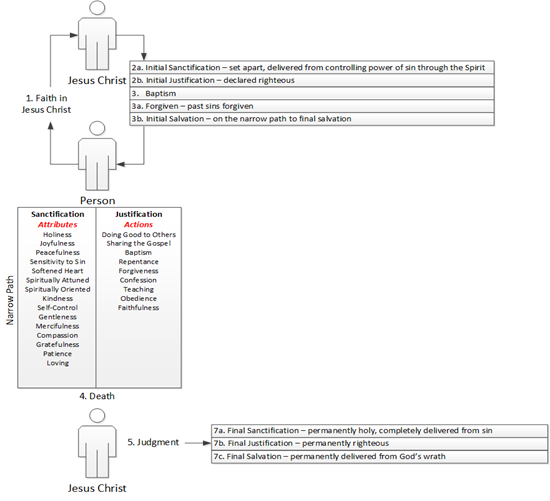
Diagram 30.1 Initial, Final Justification, Sanctification, Salvation
It is necessary to state that justification is not sanctification; they are separate Greek words. Furthermore, this second justification is not just a matter of faith but faith and the work that proceed from that faith. In fact, that is the fundamental difference between justification and sanctification. Sanctification is an internal work where we are transformed to the character of Christ to become holy. Justification is based on what we actually do and is external. The Bible is clear on this both directly and indirectly. Consider the following passages.
SCRIPTURE James 2;20-25 “But wilt thou know, O vain man, that faith without works is dead? Was not Abraham our father justified by works, when he had offered Isaac his son upon the altar? Seest thou how faith wrought with his works, and by works was faith made perfect? And the Scripture was fulfilled which saith, Abraham believed God, and it was imputed unto him for righteousness: and he was called the Friend of God. Ye see then how that by works a man is justified, and not by faith only. Likewise also was not Rahab the harlot justified by works, when she had received the messengers, and had sent them out another way?” COMMENTARY A clear teaching that for both Abraham and Rahab their works resulted in justification. But the timing here is of note. Abraham’s willingness to sacrifice his son was after he initially believed God and after Abraham had been walking with God for years. The act of his willingness to sacrifice his son cannot be connected to what the modern church calls a momentary event which occurs at first belief, hence not initial justification. The same was true of Rahab. Thus, the modern church’s teaching that there is a singular, final, and permanent justification is incomplete. There is an initial justification based on our faith; that is not in dispute, but the actions of our live also result in justification before God.
SCRIPTURE John 5:28-29 “Marvel not at this: for the hour is coming, in the which all that are in the graves shall hear his voice, and shall come forth; they that have done good, unto the resurrection of life; and they that have done evil, unto the resurrection of damnation.” COMMENTARY Notice here the eternal destiny of individuals is not stated to be based on faith, but on what a person does. In fact, we see that wherever the eternal destiny of a person is decided (with the exception of the thief on the cross who did all he could) based on their lives.
SCRIPTURE Romans 2:6-8 “Who will render to every man according to his deeds: To them who by patient continuance in well doing seek for glory and honour and immortality, eternal life: But unto them that are contentious, and do not obey the truth, but obey unrighteousness, indignation and wrath”COMMENTARY As with the passage in John above, we see that the eternal destiny of a person is based on what they do, not what they believe. Again, this is not to trivialize faith.
SCRIPTURE Matthew 25:31-46 “When the Son of man shall come in his glory, and all the holy angels with him, then shall he sit upon the throne of his glory: And before him shall be gathered all nations: and he shall separate them one from another, as a shepherd divideth his sheep from the goats: And he shall set the sheep on his right hand, but the goats on the left. Then shall the King say unto them on his right hand, Come, ye blessed of my Father, inherit the kingdom prepared for you from the foundation of the world: For I was an hungred, and ye gave me meat: I was thirsty, and ye gave me drink: I was a stranger, and ye took me in: Naked, and ye clothed me: I was sick, and ye visited me: I was in prison, and ye came unto me. Then shall the righteous answer him, saying, Lord, when saw we thee an hungred, and fed thee? or thirsty, and gave thee drink? When saw we thee a stranger, and took thee in? or naked, and clothed thee? Or when saw we thee sick, or in prison, and came unto thee? And the King shall answer and say unto them, Verily I say unto you, Inasmuch as ye have done it unto one of the least of these my brethren, ye have done it unto me. Then shall he say also unto them on the left hand, depart from me, ye cursed, into everlasting fire, prepared for the devil and his angels: For I was an hungred, and ye gave me no meat: I was thirsty, and ye gave me no drink: I was a stranger, and ye took me not in: naked, and ye clothed me not: sick, and in prison, and ye visited me not. Then shall they also answer him, saying, Lord, when saw we thee an hungred, or athirst, or a stranger, or naked, or sick, or in prison, and did not minister unto thee? Then shall he answer them, saying, Verily I say unto you, inasmuch as ye did it not to one of the least of these, ye did it not to me. And these shall go away into everlasting punishment: but the righteous into life eternal.” COMMENTARY Once again, we see the eternal destiny of these people appearing before the throne of our Lord, being judged based on their works with no mention of faith.
SCRIPTURE John 15:1-6 “I am the true vine, and my Father is the husbandman. Every branch in me that beareth not fruit he taketh away: and every branch that beareth fruit, he purgeth it, that it may bring forth more fruit. Now ye are clean through the word which I have spoken unto you. Abide in me, and I in you. As the branch cannot bear fruit of itself, except it abide in the vine; no more can ye, except ye abide in me. I am the vine, ye are the branches: He that abideth in me, and I in him, the same bringeth forth much fruit: for without me ye can do nothing. If a man abide not in me, he is cast forth as a branch, and is withered; and men gather them, and cast them into the fire, and they are burned.” COMMENTARY While there is symbolism here the point is very clear God will himself take away from the vine (that is Christ), those who do not bear fruit while those who do bear fruit will be pruned to be even more fruitful. In the end, those purged from the vine, that is those who refuse to abide in the Lord according to this passage, are thrown into the fire an apt symbol for the lake of fire. Finally, the works that are required by the Lord are those done in Christ.
SCRIPTURE Revelation 3:1-5 “And unto the angel of the church in Sardis write; These things saith he that hath the seven Spirits of God, and the seven stars; I know thy works, that thou hast a name that thou livest, and art dead. Be watchful, and strengthen the things which remain, that are ready to die: for I have not found thy works perfect before God. Remember therefore how thou hast received and heard, and hold fast, and repent. If therefore thou shalt not watch, I will come on thee as a thief, and thou shalt not know what hour I will come upon thee. Thou hast a few names even in Sardis which have not defiled their garments; and they shall walk with me in white: for they are worthy. He that overcometh, the same shall be clothed in white raiment; and I will not blot out his name out of the book of life, but I will confess his name before my Father, and before his angels.” COMMENTARY What does God say here? He has not found the works perfect before God. He does not say that their faith is not perfect before God, only their works. But then God warns them that if they don’t watch, He will come as a thief. What difference does it make when God comes if works are unimportant to God?
SCRIPTURE Titus 1:16 “They profess that they know God; but in works they deny him, being abominable, and disobedient, and unto every good work reprobate.” COMMENTARY Once again, we see the clear scriptural relationship between faith and works. Bad works deny Christ, good works, affirm Christ. Shows that our works are tied to both affirming and denying Jesus Christ. One need not simply verbally deny Christ but can deny Christ in the way they act.
SCRIPTURE Titus 3:8 “This is a faithful saying, and these things I will that thou affirm constantly, that they which have believed in God might be careful to maintain good works. These things are good and profitable unto men.” COMMENTARY Here we are to be careful to maintain good works which are profitable unto men.This is a far cry from those insist that all our works are as filthy rags. These works are described as good (Greek kalos) meaning beautiful by reason of purity of heart and life, and hence praiseworthy; morally good, noble.
SCRIPTURE Ephesians 2:10 “For we are his workmanship, created in Christ Jesus unto good works, which God hath before ordained that we should walk in them.” COMMENTARY Once again clear that we are His workmanship in Christ Jesus who have been ordained to walk in good works. But we have the ability to refuse to do what God directs us to do. What happens with those who not only refuse the good works that God has ordained us to do, but actively participates in bad works?
SCRIPTURE Galatians 6:7-9 “Be not deceived; God is not mocked: for whatsoever a man soweth, that shall he also reap. For he that soweth to his flesh shall of the flesh reap corruption; but he that soweth to the Spirit shall of the Spirit reap life everlasting. And let us not be weary in well doing: for in due season we shall reap, if we faint not.” COMMENTARY There is a clear contextual contrast here between those who sow to the Spirit or sow to the flesh with each receiving an outcome consistent with that sowing. Here corruption (Greek phthora) meaning the loss of salvation, eternal misery. In v9, we see the outcome that we will reap IF “we feint not.”
SCRIPTURE (Romans 12:37) “For by thy words thou shalt be justified, and by thy words thou shalt be condemned” COMMENTARY Another passage clearly showing that we are actually justified by the act of speaking; that is what we speak.
SCRIPTURE Acts 10:34-35 “Then Peter opened his mouth, and said, Of a truth I perceive that God is no respecter of persons: but in every nation he that feareth him, and worketh righteousness, is accepted with him.” COMMENTARY Who does God accept? It is the man that feareth him and “worketh righteousness.” How does one worketh righteousness? He performs service to God.
The first place the idea of justification by works comes about in Scripture is Abraham. What are we taught about him? We are taught that he believed God and it was credited to him as righteousness. But we are also taught that Abraham was also justified after first believing as relates to the willingness to offer his son. Many believe that continuous justification is just another name for progressive sanctification, but the Greek does not give us that as an option. Remember the verse in James 2. We are taught “Was not Abraham our father justified by works, when he had offered Isaac his son upon the altar?” (James 2:21). This was decades after Abraham first believed and when God credited righteousness to Abraham based on that initial belief. The underlying Greek word in James 2:21 is not hagiazo (sanctification), but dikaioo (justify). The faith of Abraham continued in his life and was manifest through the willingness to even sacrifice his son and through that act, as well as others, Abraham was justified. Notice this justification was based on an act, not just faith.
When we see the idea “not of works” in Scripture (ex. Ephesians 2:9) refers to works of the law as does most of the time that Paul references work in Scripture. This can be shown in most lexicons. So, when Abraham was sacrificing his son, was that a work of the law? No, the law does not command the Israelites to sacrifice their sons. In fact, this work was of the Spirit.
Furthermore, the reference in Ephesians 2:8-9 is to initial justification only, which occurs through faith and which is the only way that initial justification occurs. We have no good works to bring before God, no perfect obedience, nothing that would cause Him to declare us righteous. This is a gift of God. However, gifts from God often have requirements as the gift of salvation does and as have others in Scripture (ex. the giving of Jericho to the Israelites and the giving of the lives of those on the ship with Paul in Acts 27:24).
This brings us to an important point. The modern church’s teaching on justification does not fully align with Scripture. Nor does it align well with sanctification which we shall shortly see. God himself tells us “Little children, let no man deceive you: he that doeth righteousness is righteous, even as he is righteous” (1 John 3:7). But we have come to a time where we invalidate this very teaching because we believe that we have no responsibility before God. God specifically tells us here “Let no man deceive you.” This is exactly what men do when they tell us that our justification is completely independent of what we do, is a one-time event when we come to Christ, and is all we need. Granted initial justification is independent of what we have done and is by faith alone. But there is more to be done after we come to Christ.
The word for justification (Greek dikaióō) is most often rendered in the continuous present tense. The reason for this is that our justification is not a one and done event. Yes, there is an initial justification which is a declaration. The tense of faith is almost always the same; in the continuous present tense. This implies something key. Our ongoing justification is based on our on-going faith, and the hallmark of a true and living faith, is action. While our initial justification is a proclamation, the idea that how we use that faith is important to future justification shows that initial justification cannot be the end of the story.
In a similar manner, 1 John 1:8-9 which we discussed earlier, is also stated in the present tense and is written to Christians. In 1 John 1:9 “If we confess our sins” the aorist verbs “forgive” and “cleanse” cannot be past tense, because they are conditional upon us confessing our sins in the present tense! Context is key here. This tells us two important things.
- Since this was written after the sacrifice of Jesus Christ and is in the present tense, it applies to us today as it is a teaching to us. If our justification was once and permanent at the time that these Christians accepted Christ, it would have been in the past tense.
- We cannot have been once and permanently justified for all time at the acceptance of Christ if our unrighteousness (present tense) must still must be cleansed by the blood of Christ. That is the purpose of the shed blood of our Lord and Savior.
Scripture is clear in 1 John 5:17 where unrighteous is equated to sin. Thus, it is sin that we are being cleansed of. The problem is English Bible versions often render it in the past tense. We must decide what to do with our faith, not assume it is God’s exclusive responsibility to maintain it.
We are commanded to “be strong” and “stand fast in the faith.” (1 Corinthians 16:13). If God were in total control of our faith, there would be no reason for this command. God will help us, but scripturally it is not a one-sided effort. There are similar commands throughout the New Testament. There are also straightforward passages telling Christians not to sin and warning of the eternal consequences of willful or continual sin.
Finally, there are passages that tell us our actions affect our justification. Again, this is not because actions save us, but it is because our faith leads us to act. There is a clear relationship scripturally: faith results in works which results in ongoing justification. As has been rightly said by some. we don’t work for our salvation, but from our salvation. However, it is a grave mistake to understand a true faith as being workless. When we are not using our faith to follow where God leads, we are compromising our faith and grieving the Holy Spirit. Remember this is what the essence of what Hebrews 11 teaches us – faith leads to action. This is part of the problem with intellectual faith which does not manifest itself.
Remember Jesus prayed in the garden for Peter’s faith not to fail even though it did (Luke 22:32) and Peter had to be restored (John 21:15–17). Being justified at one moment in time does not guarantee one’s justification will remain intact unto salvation when there is additional justification, following initial justification. We have it within our God-given free will, to rebel against God and refuse to live faithfully. There are too many descriptions of failed faith in Scripture to believe that once one has faith, it is automatically preserved to eternity.
Think about a true and living faith and why it should produce works. There is no difference in this world. If we truly believe something we act. Even when we think there is a chance we act. For example, if we even believe there is a chance that a doctor can save us, we go. If the commonly adopted definition of justification were correct (justification at one moment in time equals permanent salvation), the full array of scriptural warnings to Christians throughout the New Testament about the eternal consequences of our actions would not be valid. Neither would the specific teaching above about God cleansing us (present tense) of all unrighteousness. Nor the teaching about justification flowing from works.
Remember there are warnings spread throughout Scripture; in fact, every book of the New Testament, except Philemon, contains a warning to believers. One of the biggest mistakes the modern church makes is interpreting all Scriptures which plainly define the eternal consequences of not being faithful as being unrelated to salvation is simply not being faithful to God’s Word.
The Holy Spirit does not lead us to be stagnant with our faith. Do we remain justified if we live in rebellion to God or refuse to act in a manner consistent with our faith? Much of the modern church would say “yes.” Scripture says otherwise. This occurs because Reformed tendencies have crept into their belief system where they see God as responsible for everything. Yet Scripture after Scripture teaches of man’s responsibility, both in the Old and New Testament. Once again, this does not mean man earns his salvation.
Again, a quick review is in order. Justification and sanctification are different. Justification results from faith and aligned works. Progressive sanctification occurs from being set apart and from pursuing holiness. Pursuit of holiness is character-based and independent of aligned works. A diagram may serve to summarize these.
| Act | Based on | Effected by |
| Initial Justification | Faith in Jesus Christ | God |
| Final Justification | Spirit-led works | Men who submit to the leading of the Holy Spirit |
| Initial Sanctification | Set apart by God | God |
| Progressive Sanctification | Spirit-led holiness | Men who submit to the leading of the Holy Spirit |
Diagram 30.2 Initial and Final Justification and Sanctification
Spirit-led works are those works we do that bring glory to God and help our fellow man. They are not directly related to making us more holy as progressive sanctification is. We must submit to the Spirit to do these.
Spirit-led holiness is how we are to become more like Christ, apart from Spirit-led works even though they are still Spirit-led. These including becoming more loving, joyful, peaceful, longsuffering, gentle, good, faithful, meek, and temperate. In short, these are the fruits of the spirit. We must submit to the Spirit to undergo such transformation.
As we become more holy, we will seek to submit to Spirit-led works. For example, as we become more loving, we tend to put others first and seek their well-being before our own.
Yet the critical issue is this: both justification and sanctification stand on the foundation of our faith in Jesus Christ. Our faith does come from God, but what we do with it is within our free will. Otherwise, there would be no “shipwrecked faith” (1 Timothy 1:19 and 2 Timothy 1:20) for God is not the author of corruption. Shipwreck is destruction. Only something that exists can be destroyed. Many in the modern church espouse the concept of being finally justified and finally sanctified at the moment of first belief. However, Scripture tells us both are based on our true and living faith which must endure over our lifetime.
As we consider the narrow path before us, let us do as is suggested in Hebrews 12:1b “And let us run with perseverance the race marked out for us.” This is an act; something we must do. Each of us will enter God’s court again and we must make sure that we have been faithful in following as the Holy Spirit leads us to act.