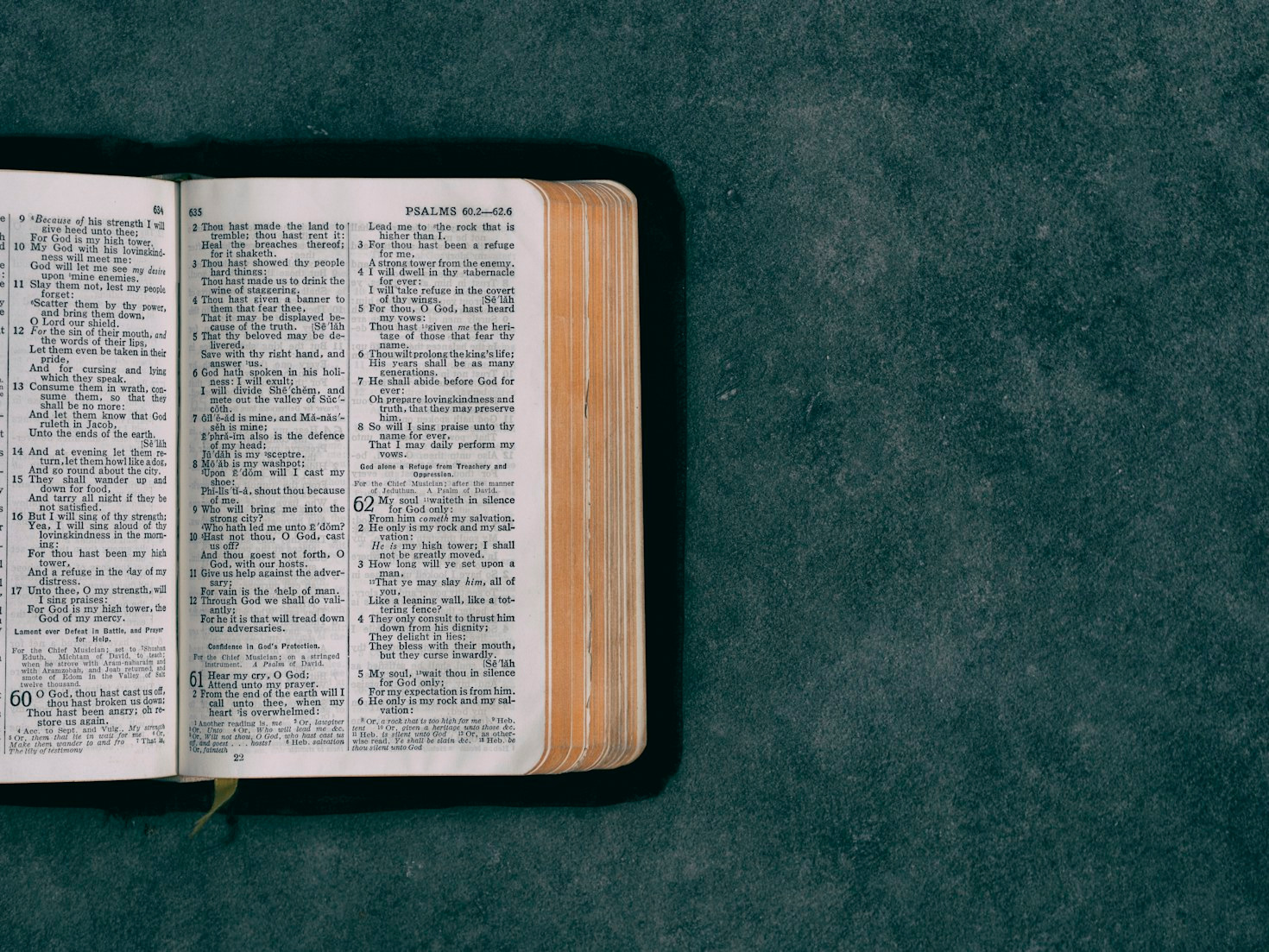
SCRIPTURE Hebrews 10:26–31 “For if we sin wilfully after that we have received the knowledge of the truth, there remaineth no more sacrifice for sins, but a certain fearful looking for of judgment and fiery indignation, which shall devour the adversaries. He that despised Moses’ law died without mercy under two or three witnesses: Of how much sorer punishment, suppose ye, shall he be thought worthy, who hath trodden underfoot the Son of God, and hath counted the blood of the covenant, wherewith he was sanctified, an unholy thing, and hath done despite unto the Spirit of grace? For we know him that hath said, Vengeance belongeth unto me, I will recompense, saith the Lord. And again, The Lord shall judge his people. It is a fearful thing to fall into the hands of the living God.”
COMMENTARY Many believers have convinced themselves that this is related to sinning after turning back to the sacrificial system (or a warning about this). But that is not the case here. Granted there is a theme in Hebrews, and even Hebrews 10, which relates to turning back to the sacrificial system, but that is not the context here. It should be noted however, that turning back to the sacrificial system would also be departing Christ. Why can we not understand it as simply sinning after turning back to the sacrificial system? There are many reasons.
First, the distinction here is willful sin. In the sacrificial system, sacrifices were required for unintentional sins with intentional (or presumptuous) sins carrying much greater penalties. If this was really about turning back to the sacrificial system then sinning, ALL sinning would be in view, not just practicing willful sin. Furthermore there is a reference to the law of Moses here and what happened to those that despised that law. How did one despise the law of Moses? They ignored it. The reason that is there is because the author is trying to stress how much more serious is to trod the Son of God underfoot and counted the blood of the covenant as unholy. That is what continuing in willful sin does.
Second, the idea of continuing in sin is referenced in Hebrews 3:12-14 which as it states results in departing from the living God. Sin hardens us. Practicing sin, especially intentionally, hardens us further. This results in not abiding (departing from the living God). It must be noted that there are many who believe that they can live any life they want after coming to Christ. Scripture simply does not leave us that option. It is that mindset that leads people to continue to practice willful sin.
Third, the order of what is stated is clear. It does not say that if you depart Christ, then this is the impact of willful intentional sin. What it says is if you are committed to willful intentional sin, these are the things you are doing (ex. fearful looking for of judgment, fiery indignation, trodden under foot the Son of God, counted the blood of the covenant, wherewith he was sanctified, an unholy thing, done despite unto the Spirit of grace). The end makes it clear that God will judge His people.
Hence at the end, this passage is about departing Christ through continued (practiced) willful sin and not the impact of returning to the sacrificial system and then sinning. It is not as some correctly understand it, about people who strive to obey but fall into sin. It is intentional desire to continue to practice sin. Christians, those earnestly coming to Christ, who continue to willfully sin establish themselves as enemies of God; the same as unbelievers (Romans 5:10), and are on the path to eternal punishment. This verse also directly contradicts current teaching on eternal security. We know this speaks to believers because it talking to those who “was sanctified” by the blood of the covenant.
Here is a short exegesis of Hebrews 10.
1 For the law having a shadow of good things to come, and not the very image of the things, can never with those sacrifices which they offered year by year continually make the comers thereunto perfect.
The old law, even though it was good, through the sacrificial parts of the law, could never make those that came to perform sacrifices perfect. Perfect here is Greek teleioō and means “to make one, meet for future entrance on this state and give him a sure hope of it even here on earth.” When we come to Christ initially we are meet (or qualified) for the future state but we still have a life to live before God. The whole New Testament affirms that everything has not been done at first faith.
2 For then would they not have ceased to be offered? because that the worshippers once purged should have had no more conscience of sins.
If they had been able to make people perfect it says then the sacrifices would continue. How do we know this according to this passage? Because if the sins were truly purged, they would have no more conscience of sins. These are committed sins. The idea here that the sins of the Old Covenant could not cleanse the conscience of the guilt. Not feeling guilty but actually the guilt from the sins. When we come to Christ we are sanctified (guilt removed) for all sins that we have committed and no longer is the guilt of that sin with us. God has removed those from us as far as the east is from the west. But again this has nothing to do with what we have not yet committed.
3 But in those sacrifices there is a remembrance again made of sins every year.
The sacrificial system led to a remembrance of sins every year (Yom Kippur). The key to this verse is understanding celebration of Yom Kippur. Those participating in Yom Kippur looked back on previous sin and as well as looking forward to the upcoming year. But there is no need for that under the New Covenant. Why? Because all past sins have been dealt with for believers. Furthermore, we are continually cleansed of our unrighteousness according to 1 John 1:7-9. We need not do it on a yearly basis as was done under the Old Covenant.
4 For it is not possible that the blood of bulls and of goats should take away sins.
Emphasizing that the blood of bulls and goats can never take away sins the method prescribed in the Old Covenant. Hence God always had in mind that the Son would come to pay for the sins of the world. This is the reason that Jesus had to come. When Jesus came, he paid for the sins of the whole world (1 John 2:2). This paying for sins was indeed for past, present, and future sins otherwise Jesus would have to be sacrificed again and again. However, just because Jesus paid for them, does not mean that we are cleansed of them when Scripture explicitly says otherwise. The process of cleansing of unrighteousness and forgiveness are continuous activities where the blood of Jesus is continually applied to us (1 John 1:7-10).
5 Wherefore when he cometh into the world, he saith, Sacrifice and offering thou wouldest not, but a body hast thou prepared me:
Jesus said after coming into the world that it is His body that was prepared for Him to be offered instead of the blood of bulls and goats.
6 In burnt offerings and sacrifices for sin thou hast had no pleasure.
Stating that God had no pleasure in the sacrificial system because the sacrificial system did not meet the needs of mankind. It acted as a sort of temporary band-aid until the real sacrifice came.
7 Then said I, Lo, I come (in the volume of the book it is written of me,) to do thy will, O God.
Jesus stating He came to do the will of the Father.
8 Above when he said, Sacrifice and offering and burnt offerings and offering for sin thou wouldest not, neither hadst pleasure therein; which are offered by the law;
A restatement by Jesus of v6.
9 Then said he, Lo, I come to do thy will, O God. He taketh away the first, that he may establish the second.
A restatement of v7 adding that the first covenant in the law is now taken away that the second, the New Covenant may be established.
10 By the which will we are sanctified through the offering of the body of Jesus Christ once for all.
We are sanctified by the body of Jesus once for all. Sanctified here is to be free from the guilt of sin. However this can only be for sins actually committed. Why? Because there is no guilt associated with something that a person has not done. Those sins that we have committed we have been sanctified from forever. Remember what sanctified here actually is defined as “purify by expiation; free from the guilt of sin (again this is not a feeling of guilt but rather the actual guilt associated with an act).” Once again this shows that it does not apply to future sins.
11 And every priest standeth daily ministering and offering oftentimes the same sacrifices, which can never take away sins:
A reference back to the Old Covenant showing that the priest ministered within the temple and offered sacrifices again as in v4 that could never take away sins.
12 But this man, after he had offered one sacrifice for sins for ever, sat down on the right hand of God;
Jesus performed a one-time sacrifice for all sins that forever. This means that sins were paid for all time. Yet payment of sins is not sufficient. We also must be forgiven. In fact the one sin paid for that will not be forgiven, an eternal sin is blasphemy of the Holy Spirit. But it was paid for. As 1 John 1:7-9 shows, conditional (if we walk in the light) then the blood of Jesus cleanses us (continuous present tense) from all unrighteousness. Similarly as v9 shows, we are forgiven (continuous present tense) when we confess sins. Thus, the blood of Jesus is applied to us to cleanse us of our unrighteousness as we go. Our guilt is removed from us as we go.
13 From henceforth expecting till his enemies be made his footstool.
States clearly that there is a day when all the enemies of Jesus will be put beneath His feet. Why is this referenced. It relates to Him sitting down at the right hand of the majesty in Heaven.
14 For by one offering he hath perfected for ever them that are sanctified.
Shows that through His sacrifice He has perfected them forever that are sanctified. However, this perfection is only for those who are being sanctified (continuous present tense). So who sanctifies us? In general I would say that God does but there are verses that clearly show that we allow or do not allow it. For example in Romans 12:2 this is a passive imperative. Since the Greek spelling of the passive and middle voice verbs are often the same there is only two ways to read this. Either a) commands us to allow Him to transform us or b) God directly tells us to transform ourselves. The former is more likely but we have to also deal with this idea elsewhere. In 2 Timothy 2:21 God states “If a man therefore purge himself from these, he shall be a vessel unto honour, sanctified, and meet for the master’s use, and prepared unto every good work.” But what is clear from Scripture is that any sanctification is supported by the will of the creature. Hence the perfection mentioned here only occurs for those that continue to be sanctified.
15 Whereof the Holy Ghost also is a witness to us: for after that he had said before,
The Holy Spirit speaking of the New Covenant.
16 This is the covenant that I will make with them after those days, saith the Lord, I will put my laws into their hearts, and in their minds will I write them;
There is no doubt that God does in fact do this however it does not change the posture of creature to the degree they are controlled. We remember that King Saul had a changed heart, was given the Holy Spirit, and was a new man. He still rebelled against God. Scripture warns us that the Holy Spirit is resisted, grieved, and quenched. We must remember the New Covenant is based on better promises (Hebrews 8:6), but not absolute ones. Hebrews makes the point twice that the promises of God are received through a true and living faith (6:12, 11:33). The better promises are because of all the additional things that God has done for us that he did not do for every believer under the Old Covenant.
17 And their sins and iniquities will I remember no more.
What sins are spoken of here? Obviously, they are again sins committed. Remember is something we do regarding a past tense event. The same is true with God. We do not remember the future. We can take rest in the fact that when we come to Christ we are forgiven, our sins are gone from us forever. But God does not and has not ever forgiven sins in advance. Forgiveness often comes with humility. It should also be noted that that remember is actually in the subjunctive mood; the mood of possibility. Are there some sins God will remember?
18 Now where remission of these is, there is no more offering for sin.
Here again, since there is remission of those sins where the remission of the penalty in the lexicon it is about sins committed. There is no penalty for an uncommitted sin. For those sins, there is no more offering because the offering has already provided for remission of those committed sins.
19 Having therefore, brethren, boldness to enter into the holiest by the blood of Jesus,
Therefore because of the blood of Jesus which has satisfied the penalty for the sins we have committed, we have boldness to enter into the place where our Lord is by His blood. As we continue to have our unrighteousness cleansed, we continue to be able to enter the most Holy place.
20 By a new and living way, which he hath consecrated for us, through the veil, that is to say, his flesh;
Reaffirming that the path to Jesus has been provided for us using the imagery of the Old Testament practice of the High Priest. It used to be the High Priest alone entered into the Most Holy Place only once a year and never without blood. He did so to atone for the sins of the people. There was a veil between the Holy Place and the Most Holy Place. That veil has been torn and we now have access to the Holiest of Holies where Jesus resides.
21 And having an high priest over the house of God;
Now Jesus is our great High Priest over the house of God and has entered once for all time where He now resides though His own blood. He entered the most Holy place.
22 Let us draw near with a true heart in full assurance of faith, having our hearts sprinkled from an evil conscience, and our bodies washed with pure water.
We are counseled here to draw near to who? To Jesus through faith. What is the sprinkling from an evil conscience? It is the purification of our hearts. We approach our Lord and Savior through faith.
23 Let us hold fast the profession of our faith without wavering; (for he is faithful that promised;)
What are we told to do here? Hold fast to our profession of faith without wavering. The idea of wavering (Greek aklinēs) means unmoved. Again, there is a reason for this admonition. If there was never a case that we could lose or compromise our faith, this statement makes no sense.
24 And let us consider one another to provoke unto love and to good works:
What are we now to do. We are to encourage others to love and perform good works.
25 Not forsaking the assembling of ourselves together, as the manner of some is; but exhorting one another: and so much the more, as ye see the day approaching.
We also should not give up assembling with other believers so that we may exhort one another.
26 For if we sin wilfully after that we have received the knowledge of the truth, there remaineth no more sacrifice for sins,
Everything as we have shown to this point, up through v21 address what has been done for the sins that we committed before coming to Christ when coming to Christ. Then beginning in v22 it begins to address the practical aspects of our faith. It is after this transition this verse now comes to us warning us about living in sin as sin here is a continuous present tense verb. What does it say? That for those who continue in willful sin who have received the knowledge of the truth there is no more sacrifice for sins. Why is this? If we look back in the OT we see a marked difference in God’s attitude between willful sin and unintentional sin (ex. Numbers 15:30-31). Remember this is also consistent with 1 John 1:7-8 where we are told if we walk in the light the blood of Jesus cleanses us (continuous present tense) from unrighteousness. But what happens if we refuse to walk in the light (practice sin willfully)? There is no sacrifice for sins left. No blood to apply to our sins to cleanse us of our unrighteousness. Remember the condition to have our unrighteousness cleansed on a continuous basis is that we are walking in the light.
27 But a certain fearful looking for of judgment and fiery indignation, which shall devour the adversaries.
Instead those people only have to look forward to judgment and punishment which will devour (or consume) God’s adversaries. What makes us an adversary of God? Living in willful sin after what God has done for us.
28 He that despised Moses’ law died without mercy under two or three witnesses:
This reinforces what is above. Who are those who despise the law of Moses? Those who flagrantly violate it. It is not about people who fall into sin, but those who despise the law. Despise here is Greek atheteō and means “to act toward anything as though it were annulled.” This is exactly consistent with the idea of willful sin above. Remember we see the same idea in the OT. Willfully violating the law of Moses carried greater penalties than inadvertent violation of the law.
29 Of how much sorer punishment, suppose ye, shall he be thought worthy, who hath trodden under foot the Son of God, and hath counted the blood of the covenant, wherewith he was sanctified, an unholy thing, and hath done despite unto the Spirit of grace?
What does this say? It reflects the idea that those in Christ (and we know this because he was sanctified of past sins at one point which does not happen apart from Jesus) are because of their continuing in willful sin, are counted the blood of the covenant an unholy thing and despite the Spirit of grace (the Holy Spirit).
30 For we know him that hath said, Vengeance belongeth unto me, I will recompense, saith the Lord. And again, The Lord shall judge his people.
Here we see the idea that God will exact vengeance (Greek antapodidōmi) meaning “in a bad sense, of penalty and vengeance; absolutely” and judgment on His people if they continue to trivialize the sacrifice of Jesus Christ. We must have the most holy reverence for what Jesus did for us and sow to and follow the Holy Spirit. Failure to do so is spiritually fatal (Galatians 5:19-21, 6:7-9, Romans 8:4, 13, etc.).
31 It is a fearful thing to fall into the hands of the living God.
This is a warning about what will happen if we fall into the hands of the living God. It is a clear reference to vengeance that God will exact for those who trample under-foot what the Son did for them. Remember the context above that shows these are in fact Christians. Non-Christians have not been sanctified.
32 But call to remembrance the former days, in which, after ye were illuminated, ye endured a great fight of afflictions;
Now there is another transition about the warning of practicing willful sin. This is a look backwards but embodies another reminder that these are Christians; they were illuminated, they were persecuted. These things did not happen to unbelievers. God is calling His children to remember the former days when these things happened to them.
33 Partly, whilst ye were made a gazingstock both by reproaches and afflictions; and partly, whilst ye became companions of them that were so used.
Once again, an expansion of what they experienced previously. Furthermore it references they also became companions of those others who went through the same things.
34 For ye had compassion of me in my bonds, and took joyfully the spoiling of your goods, knowing in yourselves that ye have in heaven a better and an enduring substance.
Still operating in the past, this is now a personalized experience with the writer suggesting that they had compassion on him and were even willing to allow their material possessions to be confiscated because they knew they had better things in Heaven.
35 Cast not away therefore your confidence, which hath great recompence of reward.
We are told not to cast away our confidence because of the reward that is forthcoming.
36 For ye have need of patience, that, after ye have done the will of God, ye might receive the promise.
God now qualifies that we need patience basing our receiving of the promise of God and the associated reward is based on doing the will of God. This idea is stated throughout Scripture.
37 For yet a little while, and he that shall come will come, and will not tarry.
Stating that our Lord is coming back. Although we may have to wait for a little while.
38 Now the just shall live by faith: but if any man draw back, my soul shall have no pleasure in him.
Draw back is in the subjunctive mood showing it is a possibility. What happens to them? God has no pleasure in them. This is a warning. Remember the just shall live by his faith (Habakkuk 2:4b). This among other passages shows that true faith produces true actions.
39 But we are not of them who draw back unto perdition; but of them that believe to the saving of the soul.
A final encouragement from God showing that He believes in them. This is an encouragement after the warning we just went through.
In the end, there is NO basis that the warnings in v26-29 are related to the Old Covenant or those considering exchanging the New Covenant for the Old Covenant. In fact that idea that it is practicing willful sin emphasizes that. If it were simply those considering ditching the New Covenant for the Old Covenant, the willful description is not needed since the Old and New Covenants address ALL sin. Willful sin is simply addressed as a part of practical living along with the other content in v22-25.